Strata Renovation Rules in NSW: What You Can and Cannot Change
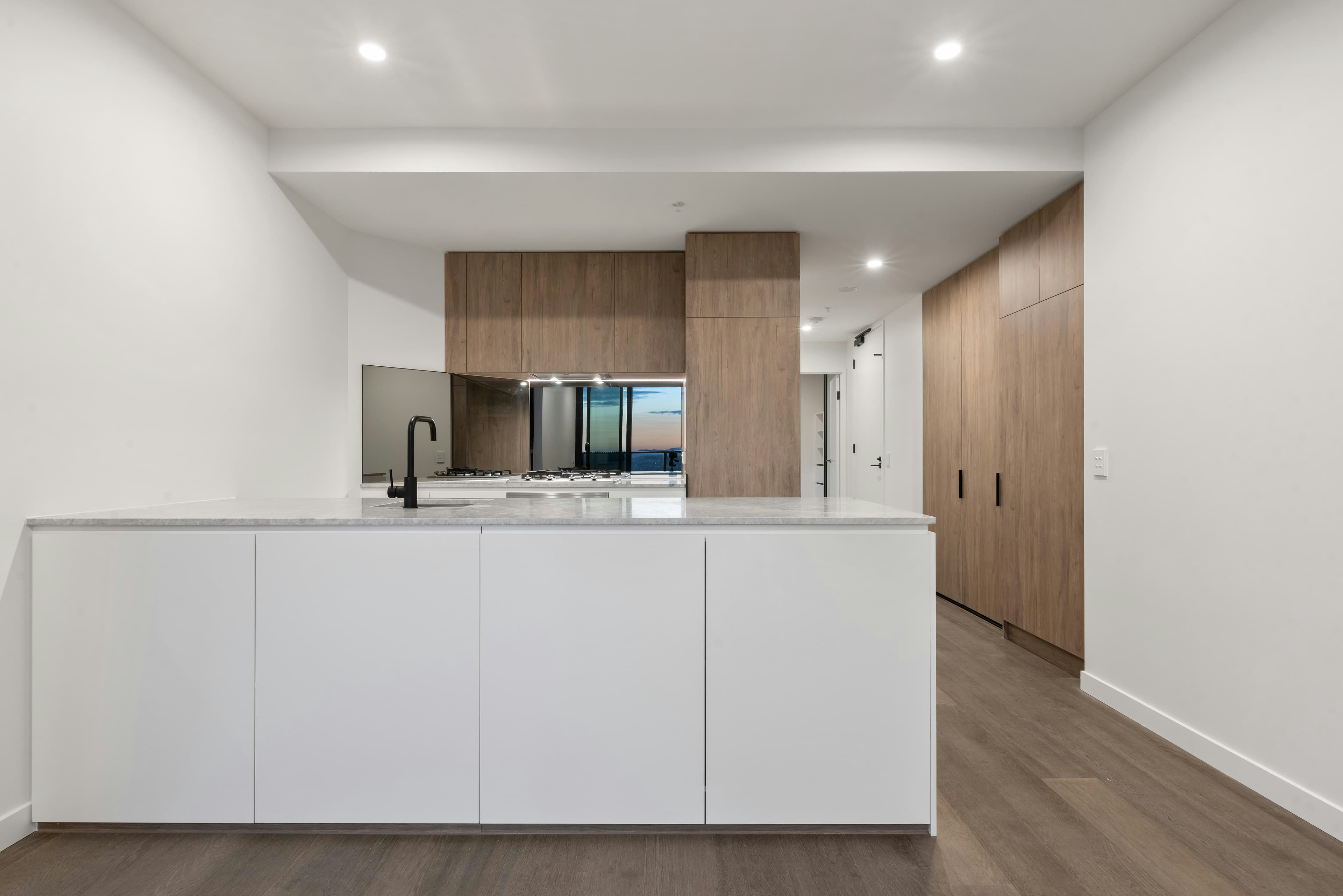
Photo by Steven Ungermann on Unsplash
You have bought an apartment in NSW and you want to renovate the kitchen. Can you just hire a contractor and start? Or do you need approval from the owners corporation first? The answer depends on exactly what kind of work you are doing — and getting it wrong can mean being forced to undo thousands of dollars of renovations at your own expense.
NSW strata law divides renovations into three categories — cosmetic, minor, and major — each with different approval requirements. The rules changed significantly with the Strata Schemes Management Act 2015, which made it easier to do simple cosmetic work but also created new traps for owners who misclassify their renovations.
This guide breaks down exactly what you can and cannot do, how to get approval when you need it, and what to watch for in strata reports if you are buying an apartment you plan to renovate.
The Three Categories of Strata Renovation
Under the Strata Schemes Management Act 2015 (sections 109–111), renovations to strata lots in NSW fall into three categories:
| Category | Approval Required | Examples |
|---|---|---|
| Cosmetic | None (just notify strata) | Painting, carpet, curtains, picture hooks |
| Minor | Strata committee approval | Kitchen renovation, new flooring, reconfiguring non-structural walls |
| Major | Special resolution at general meeting | Structural changes, waterproofing, changes to external appearance |
The category depends on the nature of the work, not its cost. A $500 job that affects waterproofing is a major renovation. A $50,000 kitchen refit that stays within your lot boundaries and does not touch structure or waterproofing may be minor.
Cosmetic Work: No Approval Needed
Under section 109 of the Act, you can carry out cosmetic work to your lot without any approval from the owners corporation. You only need to give the strata committee written notice before starting. Cosmetic work includes:
- Installing or replacing hooks, nails, and screws for hanging pictures and artwork
- Installing or replacing built-in wardrobes
- Painting (but not changing the colour of external surfaces)
- Laying carpet, floorboards, or other floor coverings
- Installing or replacing curtains and blinds
- Any other work prescribed by the regulations as cosmetic
Watch out: Floor coverings are cosmetic, but noise is not. If your new floorboards create unreasonable noise for the unit below, the owners corporation can require you to install acoustic underlay or revert the change. Many strata schemes have specific by-laws about minimum acoustic ratings for hard flooring — check before you commit.
Minor Renovations: Notify the Strata Committee
Minor renovations (section 110) require approval from the strata committee — not a full general meeting. You submit your proposal in writing, and the committee has a defined period to respond. If they do not respond within the timeframe, the renovation is taken to be approved. Minor renovations include:
- Renovating a kitchen
- Changing recessed light fittings
- Installing or replacing wood or other hard floors
- Minor changes to plumbing that do not affect common property pipes
- Removing or altering a non-structural wall within your lot
- Any other work prescribed by the regulations as minor
The strata committee can approve with conditions — for example, requiring work to be done during specific hours, mandating licensed contractors, or requiring acoustic testing for new flooring.
If the committee rejects your application, you can take the matter to a general meeting where all owners vote. If the general meeting also rejects it, you can apply to the NSW Civil and Administrative Tribunal (NCAT) for an order permitting the work.
Major Renovations: General Meeting Approval
Major renovations (section 111) require a special resolution at a general meeting of the owners corporation. A special resolution requires that no more than 25% of votes cast oppose it — a significantly higher bar than a simple majority. Major renovations include:
- Structural changes (removing load-bearing walls, modifying beams or columns)
- Changes to the external appearance of the building
- Work that affects waterproofing
- Changes involving common property (balconies, windows, pipes within walls)
- Installation of hard flooring where there was none (in some schemes)
- Any work not classified as cosmetic or minor
Major renovations are the most common source of strata disputes in NSW. The approval process is slow — you need to get an item on the agenda for a general meeting (or call a special general meeting), provide detailed plans, possibly obtain engineering reports, and then convince 75% of voting owners to support your proposal.
Common Property vs Lot Property: Where the Line Is
The single most important concept for strata renovations is understanding what is your individual lot and what is common property. The distinction matters because:
- Your lot: Everything inside the boundary walls of your unit, including internal non-structural walls, fixtures, and fittings. You own this space.
- Common property: Everything else — external walls, the roof, structural elements, shared pipes and wiring, lobbies, driveways, gardens, and often balconies and windows. The owners corporation owns this collectively.
The exact boundary is defined in the strata plan registered with NSW Land Registry Services. In most plans, lot boundaries follow the inner surface of walls, floors, and ceilings — which means the wall itself (including waterproofing membranes) is common property.
Key implication: If your bathroom renovation involves touching anything behind tiles (where the waterproofing membrane sits), you are affecting common property. This automatically makes it a major renovation requiring a special resolution, even if the work seems minor from the inside.
When You Need a By-Law
If your renovation involves changes to common property — even temporarily — you will usually need a by-law to authorise it. Under section 108 of the Act, a by-law can grant an owner exclusive use of, or special privileges over, common property. Common scenarios requiring a by-law:
- Enclosing a balcony
- Installing a split-system air conditioner with an external condenser unit
- Running new plumbing or electrical through common property walls or ceilings
- Modifying windows or external doors
- Installing security screens or awnings on the exterior
A by-law requires a special resolution (75% support) at a general meeting, and must be registered with NSW Land Registry Services to be enforceable. The by-law should cover:
- Exactly what work is authorised
- Who is responsible for maintaining the modification
- Who is responsible for repair costs
- What happens if the owner sells — does the obligation transfer?
- Whether the modification must be removed when the owner sells
The Waterproofing Problem
Waterproofing is the single most contentious renovation issue in NSW strata. Here is why:
- Waterproofing membranes are common property. Even though they sit under your bathroom tiles, they belong to the owners corporation.
- Disturbing waterproofing requires a special resolution. Any renovation that breaks the waterproofing membrane — including removing bathroom tiles — is automatically a major renovation.
- Failed waterproofing damages other lots. A bathroom leak does not stay in your apartment. Water travels through concrete to the unit below, causing damage that is expensive to repair and creates liability disputes.
- You can be liable for damage. If you renovate a bathroom without proper approval and the waterproofing fails, you can be personally liable for all resulting damage to common property and other lots.
Real consequence: NCAT regularly orders owners to pay $50,000–$200,000+ for water damage caused by unapproved bathroom renovations. In severe cases, owners have been ordered to strip out their entire new bathroom and restore the original waterproofing at their own cost. This is one of the most expensive mistakes you can make in strata.
Step-by-Step: Getting Renovation Approval
For minor or major renovations, follow this process:
- Check your strata plan to understand what is lot property vs common property. Your strata manager can provide a copy if you do not have one.
- Read the by-laws for any restrictions specific to your scheme. Some buildings prohibit hard flooring, restrict renovation hours, or require specific contractors.
- Classify the work as cosmetic, minor, or major. If in doubt, treat it as the higher category — the consequences of under-classifying are severe.
- Prepare your application with detailed plans, contractor details, insurance certificates, a timeline, and any engineering or acoustic reports required.
- Submit to the strata committee (minor) or request it be placed on the agenda for the next general meeting (major).
- Wait for approval. For minor works, the committee should respond within the specified period. For major works, you may need to wait for the next AGM or call a special general meeting.
- Get it in writing. Do not start work based on verbal approval. Get a written resolution from the committee or meeting minutes.
- Comply with conditions. Follow any conditions attached to the approval — hours of work, noise management, lift protection for material transport, etc.
What Happens If You Renovate Without Approval
Renovating without the required approval — or exceeding the scope of an approval — can have serious consequences:
- Removal orders: NCAT can order you to remove the unauthorised work and restore the property to its original condition, at your cost.
- Damages: If the work causes damage to common property or other lots (e.g. water damage from disturbed waterproofing), you are liable for repair costs.
- Penalties: Fines of up to $5,500 for individuals and $27,500 for corporations for breaching the Act.
- Sale complications: Unapproved works can be flagged in strata reports, potentially deterring buyers or reducing your sale price.
- Insurance issues: If unapproved work contributes to a claim (e.g. fire from dodgy electrical work), the building insurer may refuse to cover the damage and subrogate against you.
The owners corporation has a duty to enforce compliance with the Act and by-laws. Even if your neighbours are friendly and nobody complains initially, a change in committee composition, a building inspection, or a sale inspection can surface unapproved work years later.
What Renovation History Tells You Before Buying
If you are buying a strata apartment, the building's renovation history reveals important information:
- Unapproved works in the unit you are buying: You inherit the liability. If the previous owner renovated the bathroom without approval and the waterproofing fails after you move in, you may be responsible for remediation.
- Pattern of unapproved works across the building: Suggests weak governance and potential hidden defects. If multiple owners have renovated bathrooms without approval, there could be widespread waterproofing issues.
- Renovation disputes in meeting minutes: Indicate a building where getting approval may be difficult. Some strata committees reject almost everything.
- Restrictive by-laws: Some buildings prohibit hard flooring, limit renovation to certain months, or require bonds. Check these before buying if you plan to renovate.
StrataChecks tip: When we analyse strata reports, we flag renovation compliance issues, by-law restrictions, and any renovation disputes in meeting minutes. This helps you understand what renovations are realistic before you buy. Upload your strata report to check for renovation risks.
Renovation Approval Checklist
Before starting any renovation in a NSW strata scheme, work through this checklist:
- ☐Obtained a copy of the strata plan showing lot boundaries
- ☐Read all current by-laws for renovation restrictions
- ☐Classified work as cosmetic, minor, or major
- ☐Confirmed whether the work touches common property
- ☐Confirmed whether the work affects waterproofing
- ☐Prepared detailed plans and contractor details
- ☐Obtained required insurance certificates from contractor
- ☐Submitted written application to strata committee
- ☐Received written approval (not just verbal)
- ☐Noted all conditions of approval for contractor compliance
Bottom Line
Strata renovation rules in NSW exist to protect everyone in the building. The classification system — cosmetic, minor, major — is logical once you understand it, but the boundaries can be surprisingly unintuitive. The safest approach is to always classify upward when in doubt, get everything in writing, and never touch waterproofing without a special resolution.
If you are buying an apartment you plan to renovate, check the by-laws and meeting minutes before you commit. A building that makes renovations easy is worth more than one where every proposal turns into a six-month approval battle.
And if you are reviewing a strata report for a unit where the previous owner did significant renovations, look for evidence that proper approvals were obtained. Unapproved work is not just a compliance issue — it is a financial risk you inherit at settlement.
Upload a strata report.
Get a plain-English risk breakdown in 60 seconds. Free, no sign-up.