A Planter Box Fell From Level 29 — Now Owners Face a $37M Bill
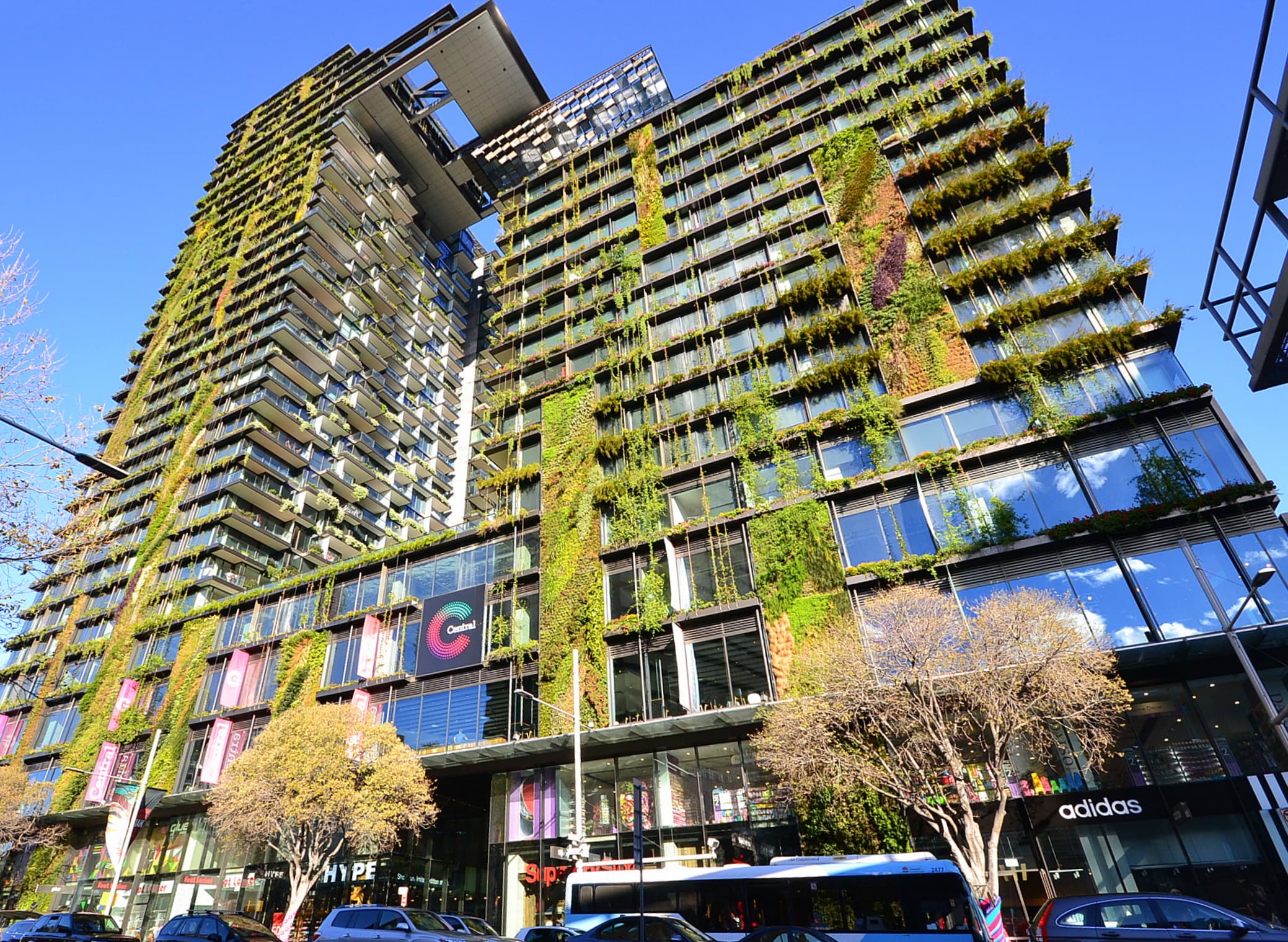
One Central Park, Broadway, Sydney. Photo: Sardaka / Wikimedia Commons (CC BY 3.0)
In April 2022, a black polymer planter box detached from the 29th floor of One Central Park in Chippendale and fell to the ground. Nobody was hurt. But what investigators found next would trigger one of the most expensive strata defect disputes in Australian history — a legal battle that has already spanned five separate court proceedings and could cost owners up to $37 million to fix.
This is the story of how a celebrated, award-winning development became a cautionary tale for every apartment buyer in NSW.
View SP 87881 on StrataChecks
See the strata plan for One Central Park — tribunal cases, manager details, and more.
1,672
Planter boxes on facade
$37M
Potential repair bill
5
Court proceedings
Lv 29
Height of first fall
The building everyone wanted to live in
One Central Park isn't just any apartment block. Completed in 2014 by developer Frasers Property and designed by Ateliers Jean Nouvel, the twin-tower complex at the old Carlton United Brewery site on Broadway was meant to redefine urban living in Sydney. Its signature feature: a “vertical garden” covering the exterior, with approximately 1,672 cantilevered planter boxes attached to the facade, filled with 35,000 plants across 250 species.
The building won the International Highrise Award in 2014, beating out entries from around the world. It was lauded as a vision of green architecture and sustainable design. Apartments sold at premium prices. Residents moved in believing they were buying into something special.
They were — just not in the way they expected.
The planter box that started it all
Each planter box — a black polymer container clad in aluminium composite panels — was bolted to the building's concrete edge beams using stainless steel T-bolts. There were 1,672 of them, cantilevered off the facade at various heights up to 30+ storeys.
In April 2022, one of these boxes detached from level 29 and fell. The investigation that followed uncovered a systemic problem: a “bad batch of bolts was amongst those used to affix the cantilever planter boxes.” The stainless steel T-bolts holding planter boxes to the building were fracturing and failing.
The scale of the problem
This wasn't a single faulty bolt on a single planter box. The defective bolts were distributed across the building's entire facade. Every one of the 1,672 planter boxes was potentially compromised — each one a heavy container of soil, plants, and water, cantilevered dozens of storeys above a busy public precinct.
But the bolts weren't the only issue. The planter boxes also had defective drainage, causing water to pool and adding extra weight to already compromised fixings. And the aluminium composite panel cladding on the planter boxes raised a separate, equally serious concern: combustibility.
Then came the fire safety problem
In the wake of London's Grenfell Tower fire in 2017, which killed 72 people due to combustible cladding, Australian governments launched nationwide audits of high-rise buildings. NSW passed the Building Products (Safety) Act 2017 to identify and rectify buildings clad in dangerous materials.
One Central Park's planter boxes were flagged. The Department of Planning and Environment issued fire safety orders requiring removal of the combustible cladding (classified as “Cladding Element 24”). Fire engineers engaged by the owners found that the polyethylene liners in the planter boxes posed fire propagation risks — testing showed “vigorous burning, causing flaming debris to fall.”
So the building now faced a compound nightmare: planter boxes held up by defective bolts, with defective drainage making them heavier than designed, wrapped in potentially combustible cladding. And there were 1,672 of them.
$37 million — and nobody agrees how to fix it
This is where the story gets truly expensive. The Department of Customer Service issued a Modified Building Work Rectification Order (MBWRO) to the developer, Frasers Broadway Pty Ltd, identifying two serious defects: the defective T-bolts and the defective drainage.
But how do you fix 1,672 planter boxes bolted to the outside of a 30+ storey building? Two camps emerged:
Option A: Remove everything
The owners' experts argued all 1,672 planter boxes must be removed from the building, the defective bolts replaced, drainage fixed, combustible cladding stripped, and the boxes reinstalled — or replaced entirely. Estimated cost: $24–37 million.
Option B: Fix in place
The developer's structural engineer developed a procedure to replace defective bolts “without detaching the planter boxes” — a far cheaper and faster approach. The developer's fire engineer also argued an “Alternative Solution” could mitigate fire risks without full removal.
This disagreement is the heart of the dispute. If the planter boxes must come off entirely, someone owes $37 million. If they can be fixed in place, the bill drops dramatically. Tens of millions of dollars ride on which engineering approach the courts accept.
Five lawsuits and counting
Between 2020 and 2025, the owners corporation launched five separate legal proceedings against the developer, builder, and various consultants. Three different law firms represented different groups of owners across these cases.
The fifth proceeding, filed in February 2025, asked the Supreme Court to declare that reinstalling the existing planter boxes would be illegal under the Design and Building Practitioners Act 2020. It was a strategic move — if the court agreed, it would effectively force the more expensive full-removal option and strengthen the owners' hand in the other four proceedings.
Justice Rees wasn't having it.
Court's findings — October 2025
- The declaration sought was “hypothetical” — it assumed the planter boxes must be removed, but expert evidence showed they might be fixable in place
- Five proceedings with three different law firms created an “unacceptable risk of inconsistent findings”
- The fifth case was dismissed as an abuse of process — but the owners could raise the same issue within the four existing proceedings
- The owners were ordered to pay the developer's legal costs for the dismissed proceeding
The remaining four proceedings continue. The $37 million question remains unresolved.
What this means for apartment buyers
One Central Park isn't a budget development thrown up by a fly-by-night builder. It was a landmark, award-winning project by a major developer with world-famous architects. It sold at premium prices. And it's now mired in a legal dispute that could cost each owner tens of thousands of dollars in special levies — on top of the years of uncertainty, insurance complications, and the general stress of living in a building with active litigation.
If it can happen here, it can happen anywhere. Here's what to watch for:
1. Check for active tribunal or court proceedings
Before buying, search the building's strata plan number on caselaw.nsw.gov.au. Multiple proceedings against the same strata plan is a major red flag. One Central Park's SP 87881 has cases going back to 2020 — any buyer doing basic due diligence would have found them.
2. Look at the capital works fund
A building facing $37 million in potential repairs needs enormous financial reserves — or will need to raise special levies. The strata report should show the capital works fund balance and any planned special levies. If it's thin, you're buying into risk.
3. Be cautious with “signature” architectural features
One Central Park's vertical garden was its defining selling point. It's also the source of its $37 million defect. Complex, novel building features look stunning in marketing brochures — but they also introduce novel failure modes that standard construction doesn't have.
4. Understand the building age sweet spot
Statutory warranty periods under the Home Building Act are 6 years for major defects and 2 years for minor ones. One Central Park was completed in 2014 and the planter box fell in 2022 — 8 years later. Some of the owners' claims may be time-barred. Buildings between 5 and 15 years old are in the danger zone where defects emerge but warranty protections may have expired.
5. Read the AGM minutes carefully
Major defect disputes don't appear overnight. There are usually years of AGM discussions, committee reports, and special resolutions before litigation starts. If the minutes mention “legal advice,” “building defects,” or “special levy,” dig deeper.
The bigger picture
One Central Park is not an isolated case. Our analysis of 1,986 NSW tribunal decisions found that building defects are the single largest category of strata disputes, accounting for nearly 1 in 3 substantive cases. And the trend is accelerating — tribunal filings have quadrupled from 77 in 2015 to 295 in 2025.
The Residential Apartment Buildings (Compliance and Enforcement Powers) Act 2020 was supposed to help, giving regulators more power to issue building work rectification orders — like the one issued to Frasers at One Central Park. But as this case shows, a rectification order doesn't mean the problem gets fixed quickly. It can mean years of litigation about how to fix it.
Meanwhile, owners keep paying strata levies, legal fees accumulate across multiple law firms, and the building's reputation — and resale values — suffer.
Timeline
One Central Park completed. Wins International Highrise Award.
Grenfell Tower fire in London triggers Australian cladding audits.
First building defect proceedings commenced against Frasers Broadway.
Planter box falls from level 29. Bad batch of bolts discovered. Fire safety orders issued for combustible cladding.
Additional proceedings filed. Three law firms now involved.
Land and Environment Court appeal resolved — planter boxes can stay if compliant with current Building Code.
Fifth proceeding filed seeking declaration on reinstallation legality.
Supreme Court dismisses fifth proceeding as abuse of process. Four proceedings continue.
Owners ordered to pay developer's costs for dismissed proceeding.
Sources & methodology
This article is based on published court decisions available on caselaw.nsw.gov.au, including [2025] NSWSC 1073 and [2025] NSWSC 1289. All claims and figures cited are drawn from judicial findings in these publicly available decisions. The litigation is ongoing — outcomes in the remaining four proceedings may differ from the positions described here.
Don't buy blind
StrataChecks automatically flags tribunal cases, defect history, and financial red flags for any strata plan in NSW.
Check a building →Upload a strata report.
Get a plain-English risk breakdown in 60 seconds. Free, no sign-up.