The Star Casino Specified Non-Combustible Cladding. They Got Combustible.
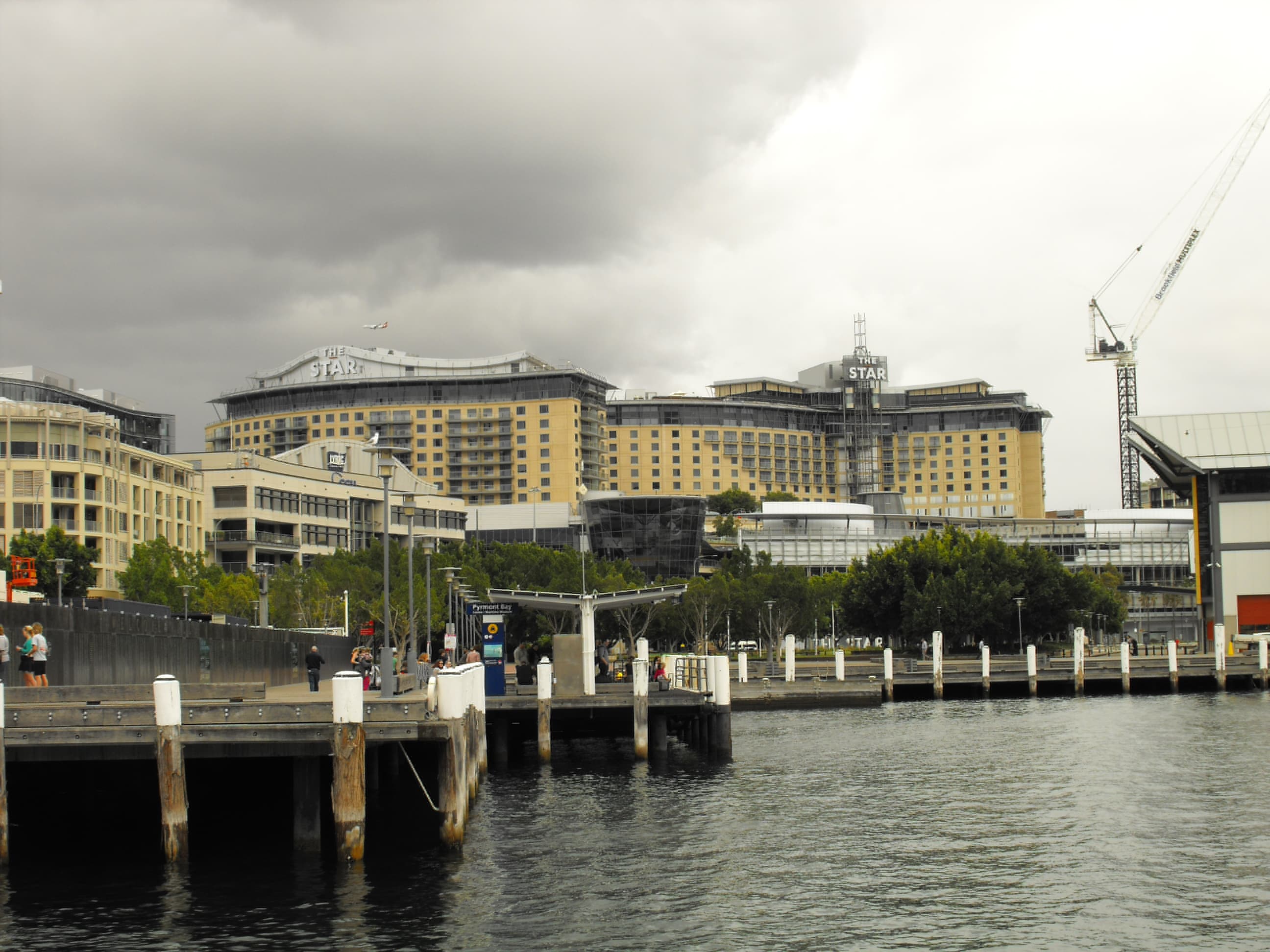
The Star Casino, Darling Harbour. Photo: Wikimedia Commons (CC BY-SA 3.0)
During a refurbishment of The Star casino in Pyrmont, the architect specified non-combustible cladding for the external facade. What actually went on the building was Alpolic FR — aluminium composite panels that, despite the “FR” (fire retardant) branding, were classified as combustible under Australian Standard AS 1530.1. The government eventually ordered the panels removed. The casino sued the builder for approximately $4 million. After a 10-day trial, the Supreme Court awarded $285,662.
The gap between what was claimed and what was awarded tells a story about how cladding liability actually works — and why buildings across NSW are still fighting about it nearly a decade after Grenfell.
$4M
Claimed
$286K
Awarded
3
Refurbishment projects
46
Court directions before trial
How it happened
Between 2014 and 2016, The Star engaged Buildcorp Group to carry out three sequential refurbishment projects at its Pyrmont casino. The architect — The Buchan Group — specified non-combustible materials for the external facade, including QuadroClad (a honeycomb-core panel) and Luxalon MultiPanel (flat sheet aluminium).
During procurement, concerns arose about cost and availability. Buildcorp and the facade subcontractor, Ausrise Aluminium, suggested using Alpolic FR aluminium composite panels instead. The casino and architect approved the substitution.
The problem
The Alpolic FR panels were classified as “combustible” under Australian Standard AS 1530.1 — the court found that “the suggestion that the ACPs had a non-combustible mineral-filled core was incorrect.” The original specification called for non-combustible materials. The substitution changed the fire classification — but the construction drawings were never updated, and the building certifier was never told about the product change.
After the Grenfell Tower fire in 2017 triggered nationwide cladding audits in Australia, the NSW government identified the Alpolic panels on The Star's facade and required them to be removed. The casino remediated the cladding and then sued Buildcorp for approximately $4 million in remediation costs.
Why the casino only got $285,662
The three refurbishment projects were treated separately by the court, and the outcome was different for each:
Project 1 — ~$3.4M claimed
FailedBuildcorp's contract was “Construct Only” — it explicitly excluded “Design Responsibility.” The warranty that works would comply with the Building Code of Australia (BCA) did not extend to non-compliance caused by design decisions. Since the architect approved the product substitution, the builder wasn't liable for using what the architect approved.
Project 2 — ~$285K claimed
FailedThe court found the ACPs on this project actually complied with the BCA under the “attachment exception” in Clause 2.4, which allows certain combustible attachments to Type A buildings. The regulatory order to remove them reflected a subsequent change in policy, not non-compliance at the time of installation.
Project 3 — $285,662 awarded
SucceededOnly the third project resulted in damages. The court awarded actual remediation costs rather than estimated costs, noting that The Star had combined the cladding remediation with other works, which reduced the attributable cost. The builder was entitled to be indemnified by Ausrise (the facade installer), and Ausrise's insurers were ordered to cover 75% of the bill.
Key legal findings
Justice Rees's judgment runs to hundreds of paragraphs across multiple issues. Several findings have broader significance for cladding disputes in NSW:
“Construct Only” contracts limit liability
When a builder's contract explicitly excludes design responsibility, the builder isn't liable for non-compliance caused by design decisions — even if they carried out the work. The court construed this strictly: a warranty of BCA compliance did not extend to items within the architect's design scope.
The “attachment exception” matters
Clause 2.4 of the BCA (2014 and 2015 editions) included an exception allowing certain combustible attachments to Type A buildings. The court found that some of the ACP installations fell within this exception — meaning they were technically compliant at the time, even though the government later required removal. Compliance is assessed against the BCA edition in effect when the work was done.
The architect was not sued by The Star
Despite approving the product substitution, the architect (The Buchan Group) was not a defendant in The Star's original claim. The builder cross-claimed against the architect, but the court found no duty of care was owed by the architect to the builder because the builder had contractually protected itself by excluding design responsibility.
Actual costs vs estimated costs
The court awarded actual remediation costs rather than estimated costs, because The Star had already done the work. When the remediation was combined with other construction works, the actual attributable cost was lower than the pre-work estimate — and the court held the lower figure was the more accurate measure of damages.
Why this matters for apartment buildings
The Star is a casino, not a strata building. But the legal principles apply directly to strata schemes facing the same combustible cladding issues. Several are already in court over similar claims — including One Central Park's $37 million planter box dispute.
The implications for strata owners:
1. Contract structure determines liability
A “Construct Only” contract can shift liability for design-related non-compliance away from the builder and toward the architect. Owners corporations pursuing cladding claims need to carefully examine the original building contract to understand who is actually liable.
2. “Combustible” doesn't always mean “non-compliant”
The BCA's “attachment exception” meant some combustible cladding was technically compliant when installed. A government order to remove it doesn't automatically mean the original work was defective — it may reflect an evolving regulatory standard. This can significantly reduce or eliminate claims against builders and developers.
3. Claimed costs rarely equal awarded costs
The Star claimed $4 million and received $285,662 — about 7% of what was sought. When remediation work is combined with other projects, courts will award the lower actual cost, not the theoretical standalone estimate. Owners corporations should not assume that remediation costs will be fully recovered through litigation.
Timeline
Three refurbishment projects at The Star, Pyrmont. Architect specifies non-combustible cladding; combustible Alpolic FR panels installed instead.
Grenfell Tower fire triggers Australian cladding audits. NSW Building Products (Safety) Act 2017 passed.
Government identifies combustible ACPs on The Star's facade. Remediation required.
Trial begins after 46 court directions. Builder applies to amend pleadings on day one ([2025] NSWSC 1210).
Judgment handed down. Star awarded $285,662 out of ~$4M claimed. Builder entitled to indemnity from facade installer's insurers ([2026] NSWSC 27).
Costs judgment delivered ([2026] NSWSC 190).
Sources & citations
- The Star Pty Limited v Buildcorp Group Pty Limited [2026] NSWSC 27 (main judgment)
- The Star Pty Limited v Buildcorp Group Pty Limited [2025] NSWSC 1210 (application to amend pleadings)
- The Star Pty Limited v Buildcorp Group Pty Limited [2026] NSWSC 190 (costs judgment)
- Australian Standard AS 1530.1 — Combustibility Tests for Materials
- Building Products (Safety) Act 2017 (NSW)
- InsuranceNews.com.au — Lloyd's syndicate to pay up over Star Casino cladding
Don't buy blind
StrataChecks flags cladding-related tribunal cases, defect history, and financial red flags for any strata plan in NSW.
Check a building →Upload a strata report.
Get a plain-English risk breakdown in 60 seconds. Free, no sign-up.